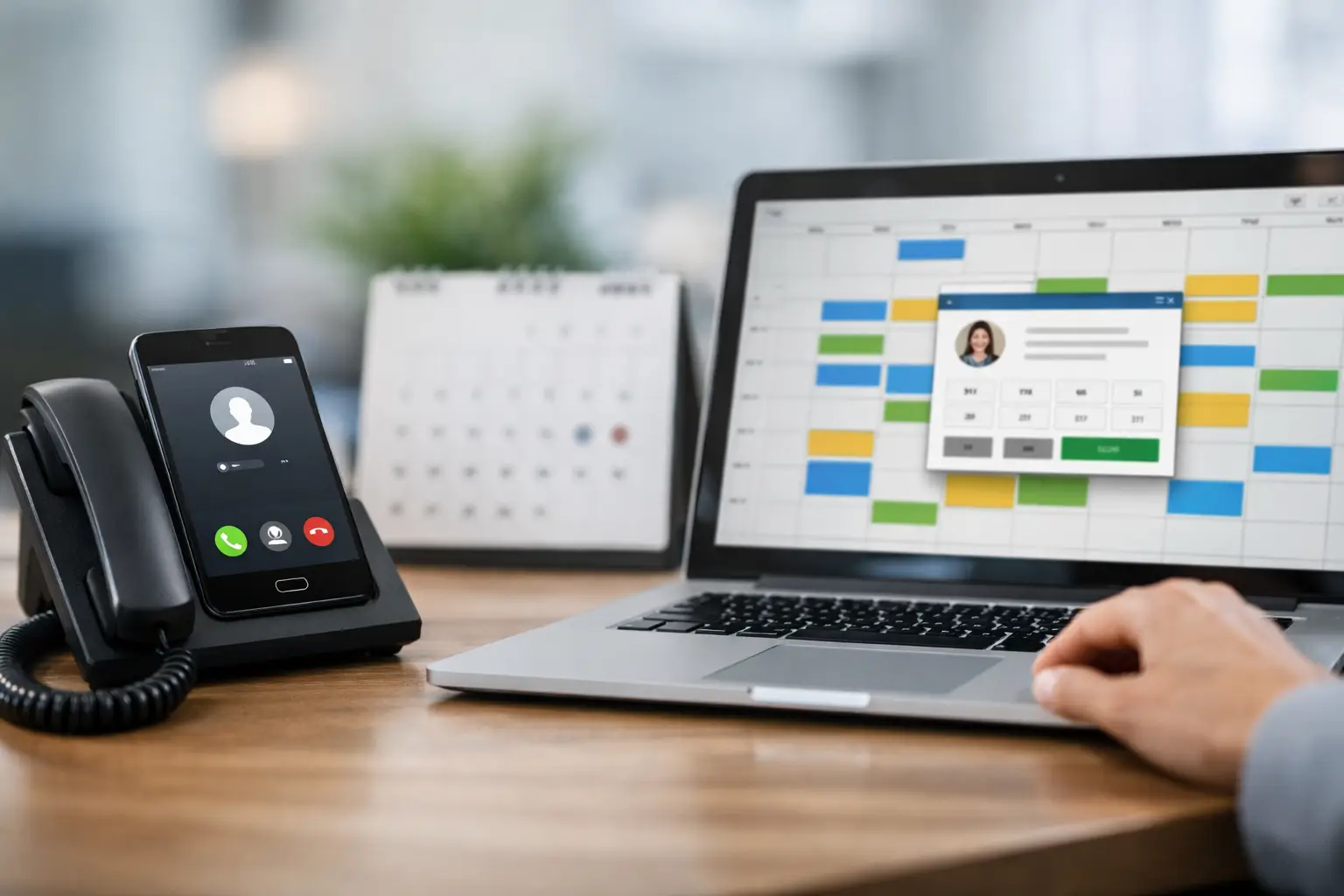
A customer calls at 8:47 p.m. because their water heater is leaking. Your office is closed. By morning, they have called two more companies, and the first one that answered got the job. That is not a marketing problem. It is a phone coverage problem - and an appointment booking call system is built to fix it.
For service businesses, insurance agencies, and sales teams, the phone is often where revenue starts. The job is not just to answer every call. It is to figure out who is serious, collect the right details, offer a real appointment, and get that appointment onto the calendar without creating more work for your team.
What an appointment booking call system should do
A useful system handles the first part of the customer conversation the same way a strong front-office employee would. It answers quickly, identifies the caller's need, asks practical qualification questions, and gives them a clear next step.
For a plumbing company, that might mean asking whether the issue is active, whether water is shut off, and what ZIP code the property is in. For an insurance agency, it might mean confirming the type of coverage, the state, and whether the caller wants a new quote or help with an existing policy.
Then it should book the right appointment based on the rules you set. That includes your service area, business hours, technician availability, appointment types, and the amount of time each visit requires. If the call needs a person right now, the system should be able to route it to one.
The outcome is simple: more qualified calls become confirmed appointments, and fewer callers hit voicemail or wait until they have already moved on.
Missed calls cost more than most owners think
Most businesses do not lose every missed caller. But they lose enough of them to matter.
Say your office misses five calls a week after hours or while the team is tied up. If two of those calls were good prospects and one would have turned into a $600 job, that is $2,400 a month left on the table. For many businesses, the real number is higher because missed calls cluster during busy periods - exactly when the team has the least ability to call back fast.
There is also the cost of slow handling. A receptionist who has to place callers on hold, track down availability, and manually enter details may do a good job, but the process breaks down when three calls arrive at once. The caller hears uncertainty, hangs up, or gets told someone will call them back.
An appointment booking call system does not replace good people. It gives them cover. The office can focus on customers in front of them, active jobs, and exceptions that need judgment. Routine booking calls still get handled.
The call flow needs to match the way you operate
A generic phone script is where many automated booking setups go wrong. Your business has rules. A system needs to follow them.
Start with the calls you actually want booked. A home service company may want estimates, maintenance visits, and standard repair calls added to the calendar, but emergency situations may need an immediate transfer to an on-call technician. An insurance team may book quote reviews while sending policy cancellations or claims issues to a licensed agent.
Next, decide what information is required before an appointment is confirmed. Usually that is the caller's name, phone number, address or service area, job type, and preferred time. Keep it tight. Every unnecessary question adds friction. Every missing detail creates follow-up work for your office.
The best call flows also set expectations clearly. If your next opening is Thursday afternoon, say so. If you offer a two-hour arrival window instead of a precise time, explain that. Booking an appointment that your team cannot honor creates a bigger problem than missing the call in the first place.
Calendar rules are where bookings become real jobs
A calendar connection alone is not enough. The system must know what it is allowed to offer.
That means separating appointment types. A 15-minute phone consultation should not consume the same slot as an in-home estimate. A technician who handles HVAC maintenance may not be the right person for an electrical service call. Some ZIP codes may be outside your service area. Certain jobs may need to be scheduled only after a deposit or review.
Before going live, write down the rules that an experienced dispatcher already knows. Include business hours, blackout dates, lead times, territory limits, job duration, and who receives urgent transfers. These rules are what keep the calendar useful instead of cluttered.
It also helps to build in room for reality. If every technician is booked to the minute, one late job can wreck the day. Many operators reserve buffer time, limit same-day bookings, or hold a few slots for urgent work. The right setup depends on your margins, travel time, and how unpredictable the work is.
Give callers a path to a human when it matters
Not every call should be forced through a booking flow. Some callers are upset. Some have complicated jobs. Some are high-value prospects who need an expert immediately.
Your system should recognize those situations and transfer the call when the right person is available. For example, a commercial property manager with a multi-location request may be worth routing directly to an estimator. A homeowner with a gas smell should be instructed to take appropriate immediate safety steps and routed according to your emergency policy, not treated like a standard service request.
This is one of the main trade-offs. If you automate too little, your staff is still buried in repetitive calls. If you automate too aggressively, you can make serious customers feel boxed in. The answer is not one script for every business. It is a clear line between routine booking and calls that need a person.
Set it up around real calls, not assumptions
The fastest way to build a better booking operation is to review recent calls. Pull 20 to 30 examples from a normal week: booked jobs, missed calls, calls that went nowhere, after-hours calls, and calls your team had to transfer.
Look for repeat patterns. What do callers ask first? Which details does your dispatcher always need? Where do calls stall? What makes a lead qualified? Those answers should shape the call flow.
Before launch, test the system the way a customer would. Call with a basic request. Call outside your service area. Ask for an unavailable time. Give an incomplete address. Ask to speak with a person. If the process feels confusing to you, it will feel confusing to a caller who is stressed and short on patience.
A managed service can be especially useful here. Someone should monitor call outcomes, maintain the phone setup, catch calendar issues, and adjust the conversation as your operation changes. Otherwise, a booking tool can become another login your team owns but nobody has time to improve.
Measure booked work, not just answered calls
Answer rate is a starting point, not the finish line. A system can answer every call and still fail if it books poor-fit appointments, creates no-shows, or sends your team jobs they cannot service.
Track the numbers that affect payroll and revenue: total inbound calls, calls answered, qualified callers, appointments booked, show rate, booked revenue, and calls transferred to your team. For outbound follow-up or lead lists, track live conversations, qualified prospects, and warm transfers separately from raw dials.
Review a sample of calls every week at first. You will quickly find whether callers are dropping off at a certain question, whether the script is missing a common job type, or whether the calendar rules are too restrictive. Small changes can recover meaningful revenue when they happen across dozens of calls each month.
Also watch the quality of the appointments. A full calendar is not automatically a healthy calendar. If your technicians are driving to bad addresses, unqualified requests, or jobs outside their scope, tighten the questions before booking. The goal is not volume for its own sake. It is appointments your team can actually convert into profitable work.
Start with the calls you are already losing
You do not need to rebuild your entire front office to get value from an appointment booking call system. Start with after-hours calls, lunch coverage, overflow during busy periods, or the lead sources your team is slowest to contact.
Those are usually the cleanest opportunities because the alternative is often voicemail, a delayed callback, or no follow-up at all. Once those calls are consistently turning into real appointments, you have a better foundation to expand coverage.
The caller who reaches you when the problem is urgent is not looking for a technology experience. They want a clear answer and a time on the calendar. Build your phone operation around that, and the calendar starts doing more of the work it is supposed to do.